
How to Choose the Right Well Cap: Locking vs. Standard vs. Vapor Monitoring
By Jeyree Reed

If you've spent any time managing monitoring wells, you already know that the cap sitting on top of that casing is far more than a piece of hardware. It's the last line of defense between your groundwater data and the outside world. The wrong cap invites contamination, vandalism, and regulatory headaches. The right one gives you clean samples, site security, and peace of mind.
This guide breaks down the three main categories of monitoring well caps — standard, locking, and vapor monitoring — so you can make a confident, application-specific choice before you order.
What's Actually at Stake When You Choose a Well Cap?
Groundwater monitoring data is only as reliable as the hardware protecting the well. A compromised cap can allow surface water intrusion, introduce atmospheric contaminants, or provide unauthorized access that invalidates your sampling results. Environmental consultants and site managers understand that sample integrity starts at the wellhead — not in the lab.
The EPA's groundwater monitoring requirements under 40 CFR Part 258 mandate that monitoring systems yield representative samples. That standard is directly tied to how well your casing is protected between sampling events. A cap failure isn't just a maintenance inconvenience — it can trigger costly resampling, permit modifications, or worse.
Standard Well Caps: When Basic Protection Is Enough
Standard well caps are simple snap-on or friction-fit caps designed to keep debris and large-scale contamination out of your casing. They're appropriate for low-risk sites where security isn't a concern and vapor monitoring isn't required. Think of them as a baseline — functional, affordable, and widely available in sizes from 1" through 6" to fit SCH 40 and SCH 80 PVC casing.
Where standard caps fall short: they offer no protection against tampering, provide only limited protection against surface water infiltration in flood-prone areas, and create no seal against the atmosphere — which matters enormously when you're sampling for volatile organic compounds (VOCs) or landfill gas constituents.
Locking Well Caps: Security, Compliance, and Tamper Evidence
For any site where unauthorized access is a risk — and that's most sites — locking well caps are the professional standard. They expand inside the casing ID to create a watertight, tamper-resistant seal that can only be released with the correct key or wrench.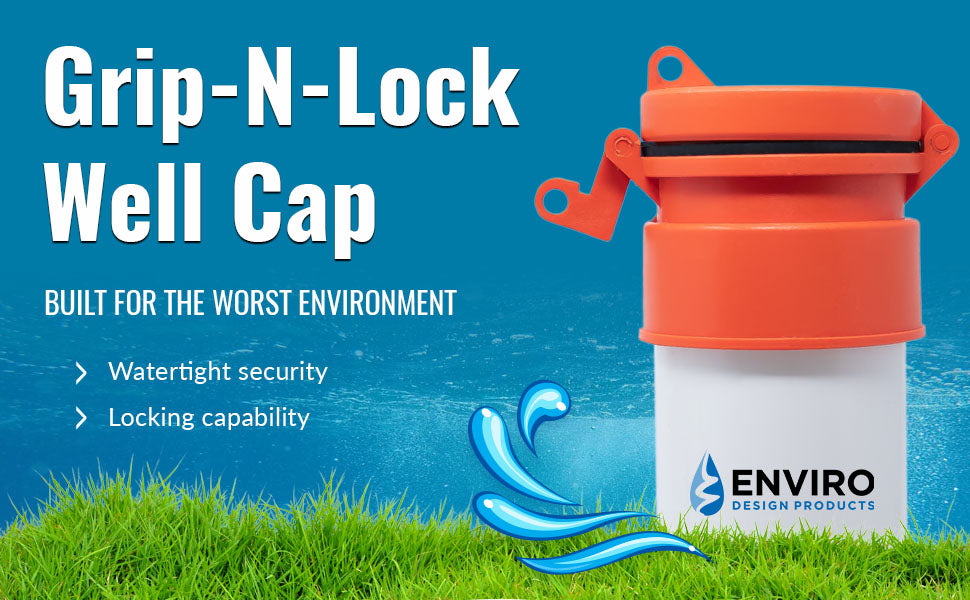
Enviro Design Products carries the Grip-N-Lock Well Cap, a field-proven solution designed for SCH 40 to 80 PVC casing. The Grip-N-Lock is a redesigned replacement for the old snap cap — engineered with a superior gripping mechanism that holds firmly under freeze-thaw cycling and prevents accidental dislodgment. It accepts padlocks and lock-out tags for full chain-of-custody documentation.
Key features to look for in a locking well cap:
• Watertight expansion seal on the inside diameter of the casing
• Domed top to shed water and prevent pooling
• Padlock or key compatibility for site security
• Bright color-coding for easy well identification
• Lightweight nylon construction that won't corrode
Browse our full selection of locking well caps in multiple sizes for any casing diameter.
Vapor Monitoring Well Plugs: When Atmosphere Matters
Vapor monitoring well plugs occupy a different category entirely. These are engineered for sites where you need to sample headspace vapors or groundwater without ever removing the cap from the casing — a protocol that dramatically reduces cross-contamination risk, field time, and personnel exposure.
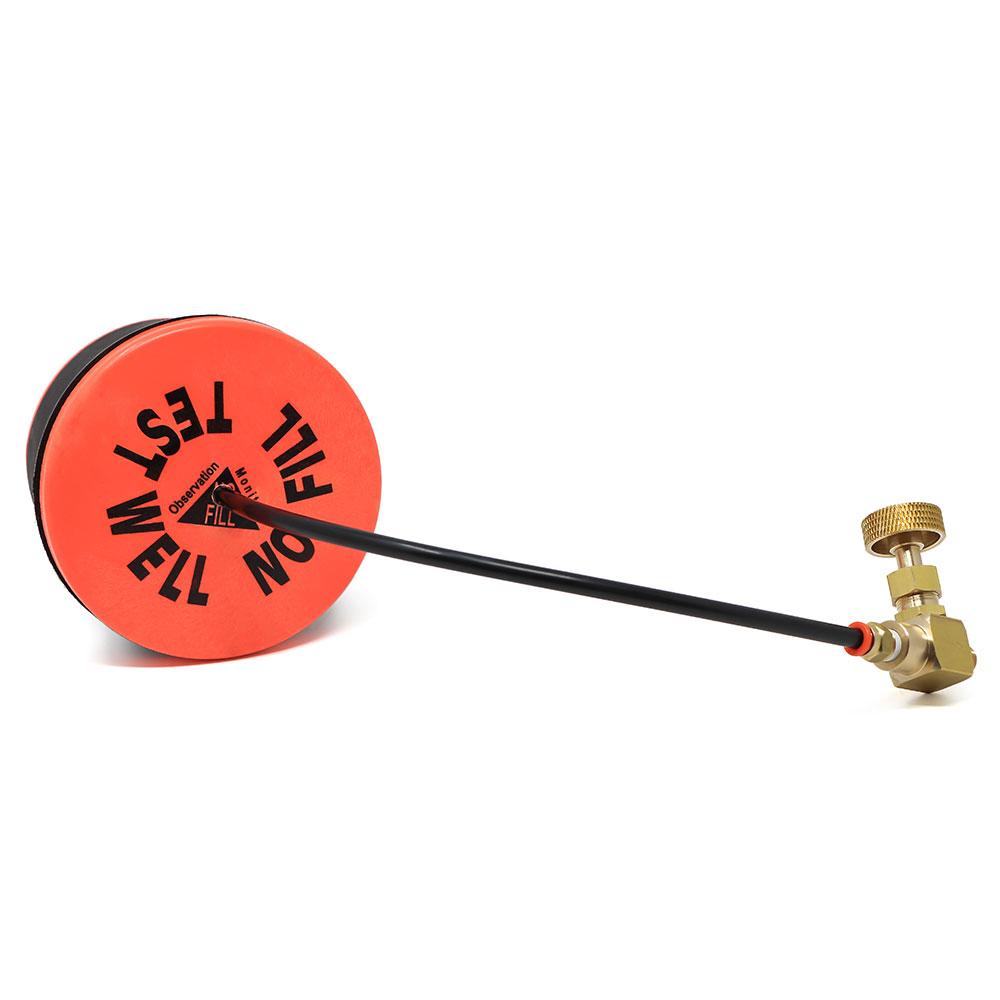
The self-sealing mechanism is the key innovation. A valve inside the plug opens only when your sampling equipment is connected, then re-seals automatically when disconnected. This maintains a true closed atmosphere inside the casing between events — critical for landfill gas monitoring, UST sites, and PFAS-related investigations where atmospheric dilution of a sample could invalidate results.
The Torquer Locking Well Vapor Extraction Plug replaces your standard monitoring cap and adds a vented port with a locking expansion mechanism. It accepts padlocks and safety lock-out tags, and the domed top prevents liquid pooling above the wellhead. Available from 1" through 6" to fit most casing configurations.
For installations where headspace is limited — such as inside a monitoring well manhole — consider the FlushLock Vapor Extraction Plug. Its flush-height, flush-diameter profile sits exactly level with the top of the casing, freeing up space inside tight PRO casings or manholes while delivering the same watertight, self-sealing performance.
Side-by-Side: Which Well Cap Is Right for You?
Standard Cap → Low-risk monitoring sites, non-sensitive analytes, temporary installations where security is not required.
Locking Well Cap → Any site requiring tamper resistance, chain-of-custody documentation, watertight seal, or padlock compatibility. The professional default for most environmental monitoring programs.
Vapor Monitoring Plug → Sites requiring closed-atmosphere sampling for VOCs, landfill gas, SVOCs, or PFAS constituents. Anywhere sample exposure to ambient air during cap removal would compromise data quality.
Don't Forget Well Plugs and Protectors
If your casing terminates below grade inside a manhole, pair your vapor plug with a monitoring well manhole for full above-grade protection. For temporary decommissioning or inactive wells,
locking well plugs insert directly into the casing ID to block the bore entirely — no threads, no fuss.
Get the Right Cap the First Time
With most items shipping next-day. If you're unsure which cap fits your casing or sampling protocol, our team is available Monday through Friday from 9 AM to 5 PM EST at (866) 514-3684, or browse our complete well monitoring equipment collection to compare products side by side.